


 English
You are sitting watching the television. it is late at night; you are half asleep and then suddenly you see a large house spider running across the carpet. You scream!
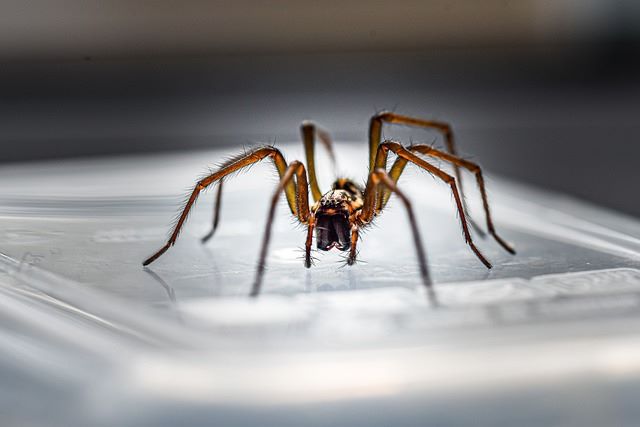
Common House Spider
Some statistics show that 50 percent of women and 10 percent of men have this spider fear or arachnophobia as it is called. Along with bats, snakes and sharks, spiders are a much-beleaguered species. Yet this should not be the case. It has been estimated that 25 million tons of spiders will kill about 800 million tons of prey every year. That’s a large amount!
So, what are spiders? There are approximately over 51,000 species worldwide and can be found in all continents except the Antarctic. They range in size from the large goliath bird eating tarantula to the tiny patu digua from Colombia.
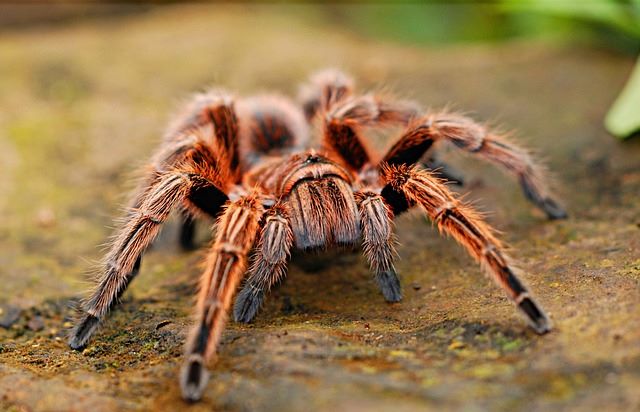
Tarantula Spider
Spiders are air breathing arthropods that have eight limbs and unlike insects they do not have antennae. Equipped with eight eyes (some species have less) they have poor eyesight (usually) and rely instead on touch, vibration and taste to navigate and find food. They have fangs which are sharp structures that are hollow with an opening at the tip. When prey is captured, the fangs are plunged into the victim and venom is injected. Fangs are not visible but what is noticeable and sometimes mistaken for fangs are structures called palps. These large mouthparts are used to manipulate food, as supplementary walking legs, for communication, as sensory structures and as sex organs. They are a good way to distinguish males from females. The males have thicker palps which look like two boxing gloves! All spiders can bite but only a few have fangs strong enough to penetrate human skin and most spiders prefer to flee rather than bite! All apart from one, the Bagheera kipling species of jumping spider which feeds on acacia plants, are predators. They mostly eat insects although a few larger ones will take fish, birds and reptiles.
There are no dangerous spiders living in Ireland. Australia has the deadly Sydney funnel web spider and Brazil has the dangerous Brazilian wandering spider. Both especially the former can kill humans. Spider abdomens have spinnerets which. extrude silk to make webs. Webs differ in appearance; some can be shaped like a spiral orb while others resemble a tangled cobweb sticky mess!
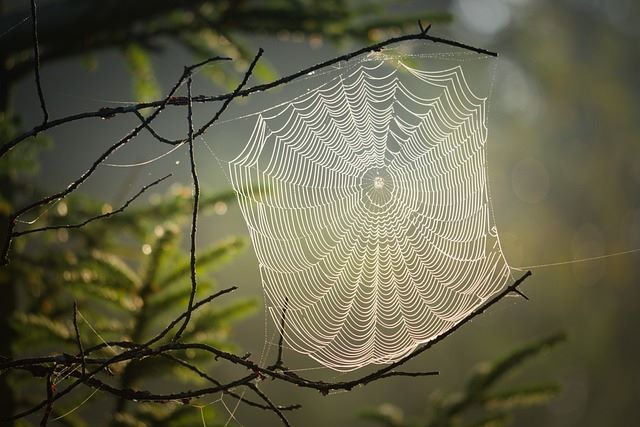
A spider's web
We have over 650 spider species in the United Kingdom. There are many spiders which are collectively known as house spiders but the one which seems to inspire the most fear is the common house spider. These are large and can grow even larger if temperature and prey availability are right. They are quite hairy looking and vary in colour from tan to dark brown. They often have patterns on their back which helps them to blend into their environment. Common places to find them are in upper corners of rooms, under and behind furniture. and in dark dampish cupboards. This spider can sometimes appear to be running at you, but this is only because they are looking for a dark hiding place and your shadow may appear as that dark spot!
They eat insects and pests such as flies, earwigs and clothes moths. If there is no prey to eat, they will consume thrown away food stuff and can live up to 8 weeks with no food at all.
Females are larger and rounder and can be found building their sheet web in undisturbed corners while the leggy males can be spotted searching for a partner. It is these males which are mostly the culprit for making us scream! Females in this species do not eat males after reproduction and both will live on a web together. The females suspend eggs in sacs in their webs, each sac having up to 200 eggs. After emerging from the sac, the spiderlings remain in the web for a while before dispersing.
Some will live all year in our houses, but they will also inhabit outhouses and garages where it is dark, warmish and safe. It’s in September when it becomes colder that we start to notice them in our homes.
To prevent them coming into the house close windows and doors, seal cracks and gaps, place a mesh screen on all air vents. Spiders can also come in by hitchhiking not only on our clothes but also in large items such as furniture and sofas Vacuuming regularly and spraying essential oils of peppermint into corners, cracks and cupboards are preventive measures. Equal amounts of water and vinegar with a bit of pepper can also be a deterrent. One thing that has been proven not to work is placing conkers around rooms in the house. Conkers contain saponin which spiders dislike, but evidence have shown that it will not repel them to the extent that the spiders will leave!
It’s also important to keep the house clean and free from clutter so that spiders have no hiding places. Keep bedrooms tidy with no clothes lying around or dirty dishes hiding under the bed! Try and keep curtains and blinds open as spiders hate light. Spiders also like damp so make sure floors are kept dry and keep outside foliage like ivy and clematis away from windows and doors as this is a great place for them to live.
House spiders are usually very cooperative If you want them out of the house. The easiest way is to place a glass tumbler over them (they usually won’t move when you do this) and slide a piece of thickish paper such as a card underneath. Carry out to a garage or outhouse and release the spider to enjoy its winter in safety. Males’ lifespan can be up to a year, females will live for 2 years or more if in a safe indoor environment.
Spiders have many predators from large insects to birds, reptiles, mammals and even other spiders. If you have a cat, you will often find them hunting and eating them. Spiders are high in taurine and its possible that cats can smell this compound, and they do appear to enjoy the taste of spiders. Ugh! The good news for anyone with arachnophobia is that by October house spiders entering our homes is usually over.
As already mentioned, all spiders are great helpers in destroying pests. By keeping control of flies for instance they help in preventing the spread of dangerous diseases such as malaria. Many cultures believe that allowing a spider to run around the house is good luck. It is said ‘if you want to live and thrive let the spider run alive “’ So the next time you see a spider running over the floor remember that wise saying!
SPIDER SNACK
ADULT HELP REQUIRED
A very quick and easy snack which is healthy and fun to make! You will need.
1 Victoria plum (halved with the stone removed)
Handful of raisins
8 Cocktail sticks
Edible eyes or blueberries
Icing sugar pen
1.The plum is the body of the spider
2.Put raisins on to each of the cocktail sticks until the sticks are covered with raisins
3. Push four cocktail sticks on to each side of the plum. Your spider now has very long legs!
4. For eyes stick two edible eyes or blueberries on to the plum using the icing sugar pen.
5. You should now have a lovely little spider.
ASK AN ADULT TO REMOVE THE RAISINS FROM THE COCKTAIL STICKS BEFORE EATING
The Common House Spider and Spider Snack written by Maureen Graham