


 English
It is amazing to think that if you are lucky up to 50 species of birds may visit your garden during the winter. The most likely visitors will be starlings, house sparrows, blackbirds, blue and great tits, robins, goldfinches and the lovely delicate collared doves.
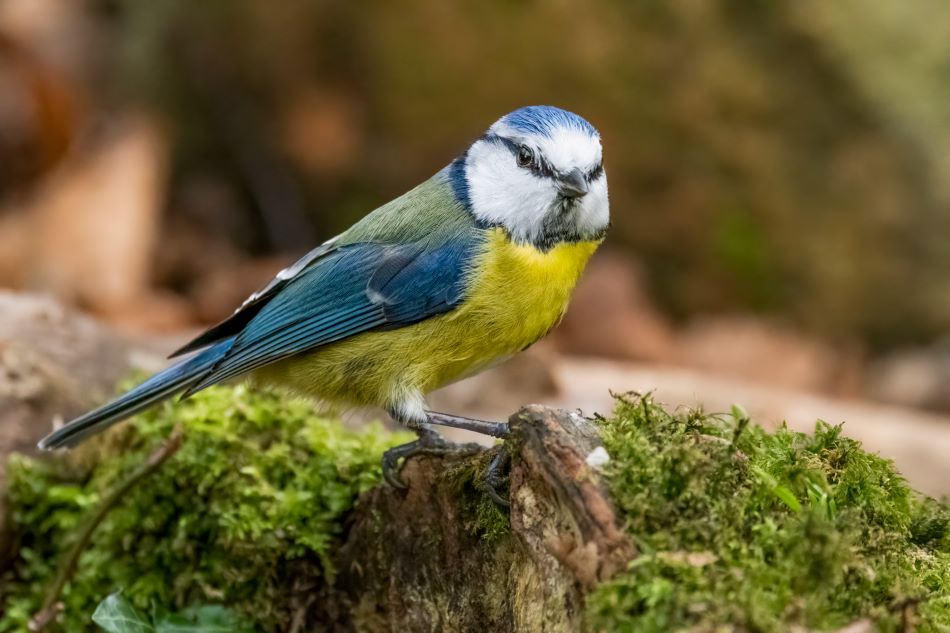
Blue Tit - Photo by Thomas Campbell
If your garden happens to be near to woods you are indeed very lucky as , woodpeckers, blackcaps, coal and long tailed tits can become regular visitors . Ground feeders like dunnocks, wrens and all thrush species, (fieldfares, redwings, blackbirds, mistle and song thrush) will visit gardens for fruit and berries. It is also not uncommon to have magpies and jackdaws lurking about often pinching the food from the smaller birds!
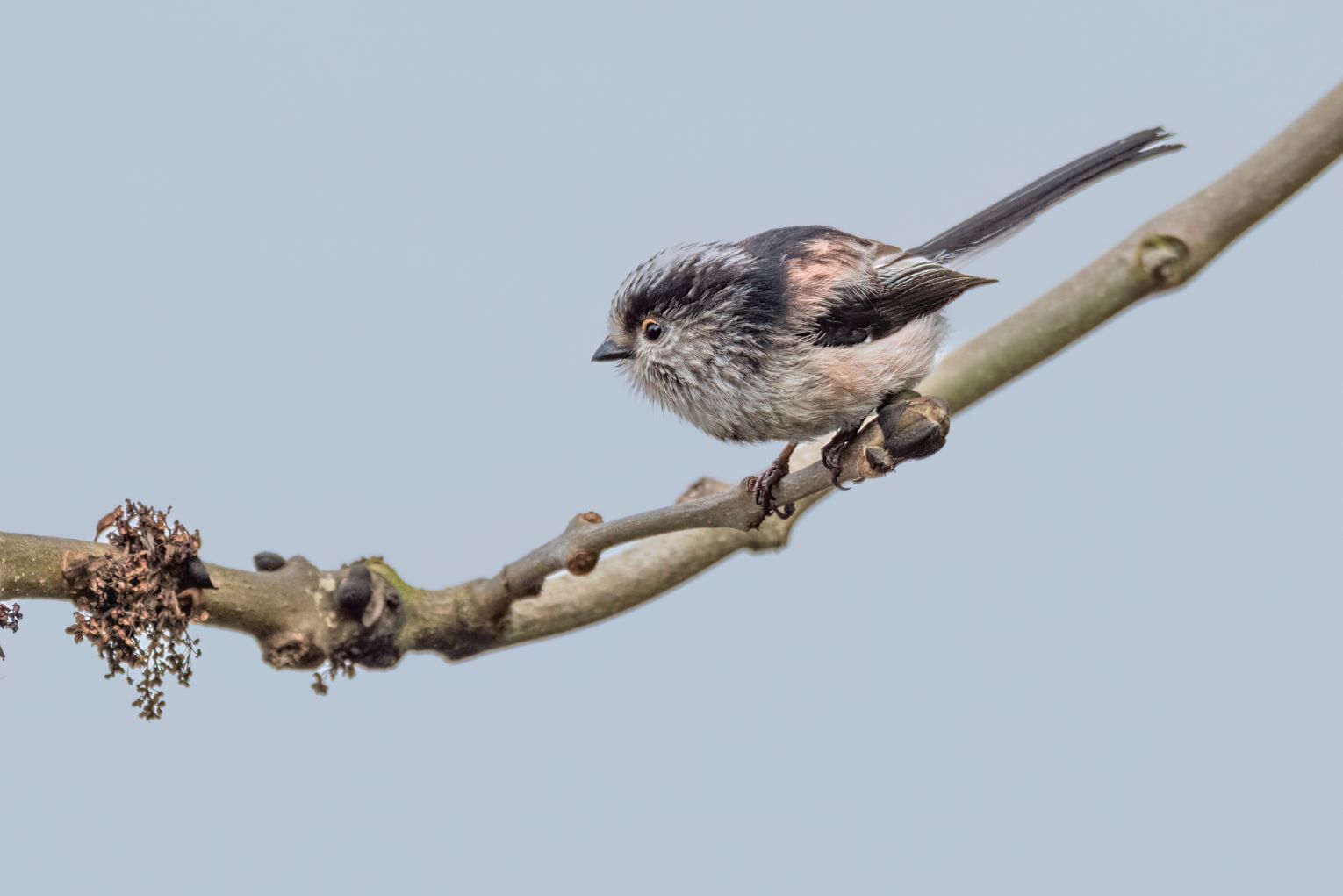
Long-tailed Tits--photo by Thomas Campbell
Sparrowhawks will sometimes be attracted to bird tables not for the food but for its birds. Many will say that it is a sign of a healthy bird population when sparrowhawks are about but there is no denying when sparrowhawks find a good food supply i.e. your garden birds, they will keep on visiting until until the local bird population is decimated or move to a safer habitat. One bird the size of a dove will keep a female sparrowhawk satisfied for 3 days in the winter while male sparrowhawks hunt and eat smaller birds such as blackbirds and starlings.
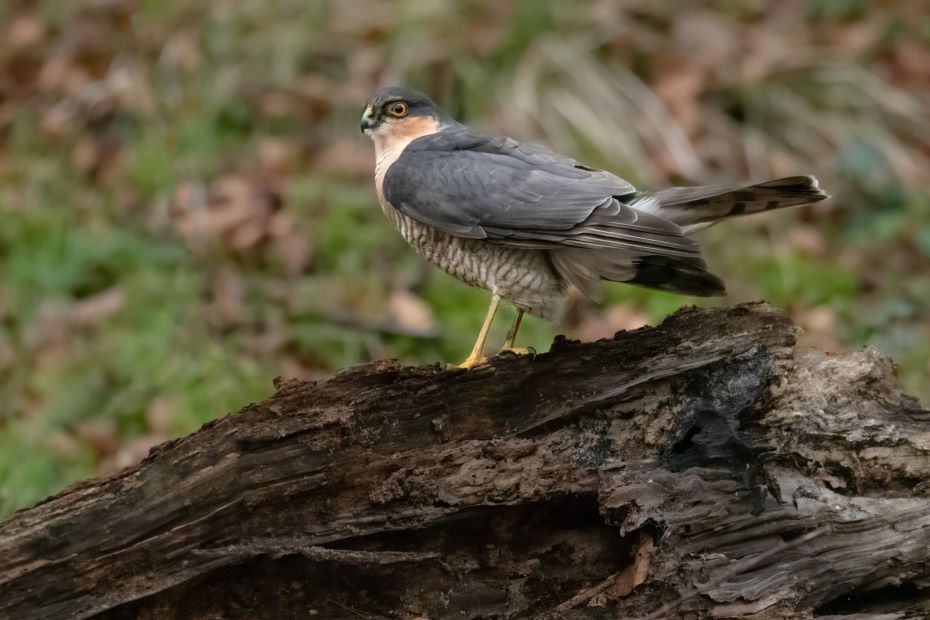
Male Sparrowhawk--photo by Thomas Campbell
To attract birds into your garden in Autumn and Winter put out food and water every day and if necessary, twice a day in very cold winter days. Birds quickly rely on food provided by humans so it’s important to feed regularly. The value of this winter feeding is well known as birds need high-energy, high-fat foods to survive.
Some naturalists think it is best to avoid feeding birds during the Spring and Summer as there is a risk that food given to the nestlings will either not be of a good quality or will have a potential to choke the young. Perhaps the wisest solution is to feed selected foods only, such as black sunflower seeds, sultanas, protein rich mealworms and good seed mixtures free of peanuts. Remember to remove any uneaten food from the feeders so that it won’t be fed to the vulnerable nestlings
There are different ways to serve food to different birds. The standard bird table can either be made or bought. In both types it’s important to get or make one with a raised edge so that food will not spill on to the ground. There also should be a gap at the corner for clearing away uneaten food and other debris plus a few holes in the tray for water drainage. Most bird tables have a roof to protect the food, but this can deter some birds in using the table.
Nut feeders are widely available in shops. They are either made from mesh or metal. Both should have holes large enough to prevent damage to birds’ beaks but small enough to prevent whole nuts from being removed. Peanuts are rich in oil and protein, the oil providing a good source of energy while the protein is useful for growth and moulting. Woodpeckers love nut feeders!
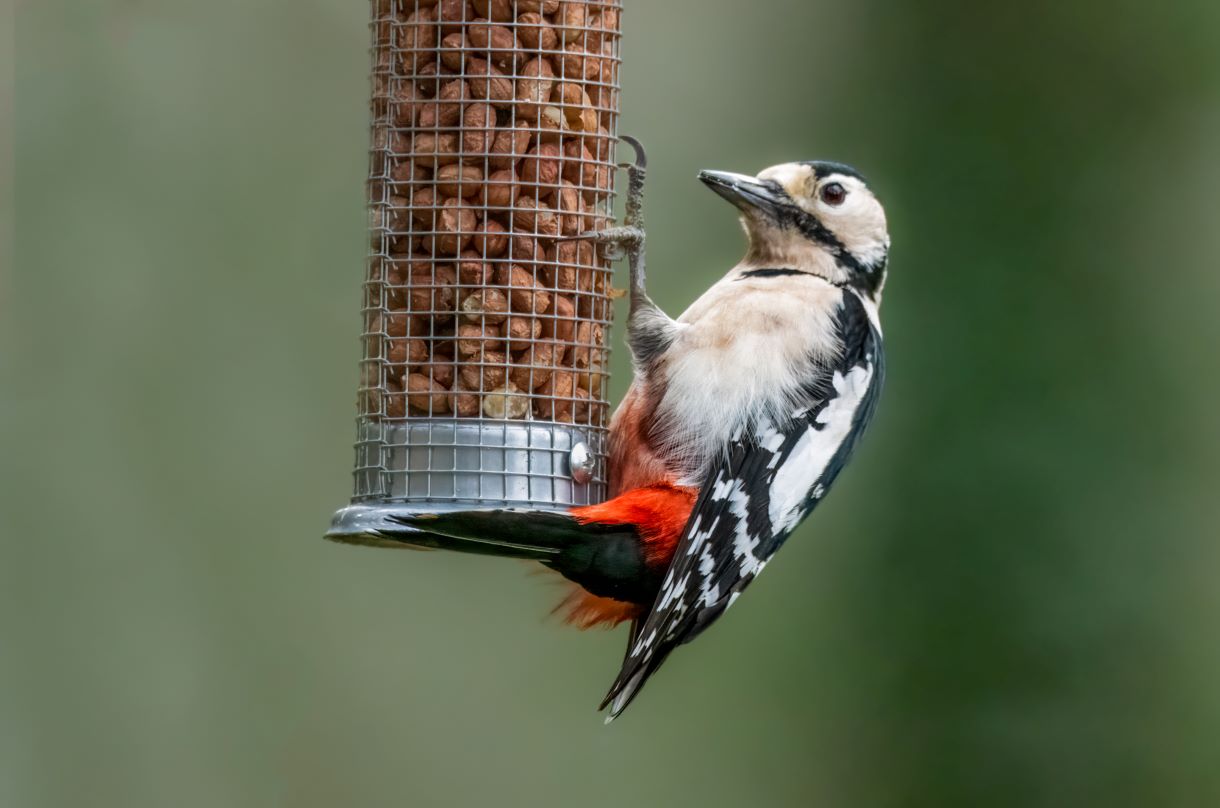
Great-spotted Woodpecker on nut feeder--photo by Thomas Campbell
Seed containers are often plastic cylinders with perches. They are suitable for all seeds and sunflower mixtures. Nyjer (thistle) seeds are very small and fine and specially designed feeders are necessary to buy for them so that spillage is prevented .
Some people like to make their own bird feeder. Half coconuts for instance (let the birds eat all the white flesh first ) can be filled with melted lard and then mixed with seeds, cake scraps, nuts and sultanas Bird cakes are fun to make. Use an empty yogurt container, make a hole in the bottom and thread a string through it , then pour in melted –let a grown up do this--lard, add seed and peanuts and when set hang from a tree close to bushes or shrubs to prevent predation. Other ideas are filling cracks in a tree or wall with a lard mixture. Treecreepers will be particularly thankful for this.
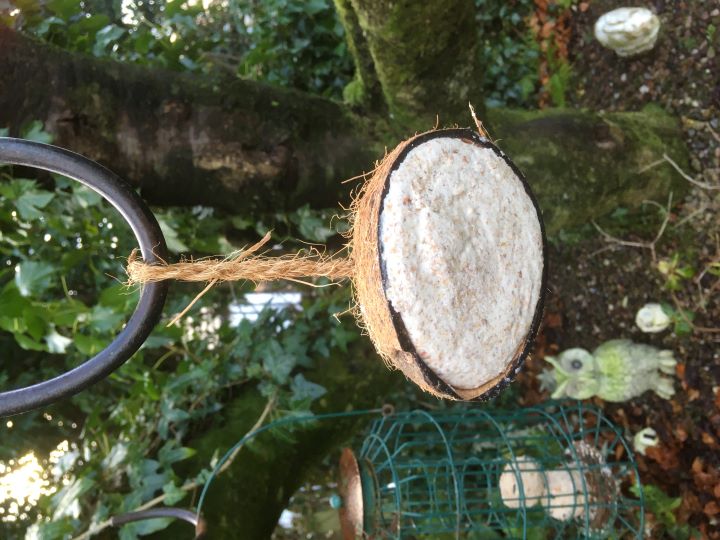
A half coconut shell filled with lard and seed mixture
For ground feeders scatter the food well over the ground to stop competition. Wrens which don’t normally like going to a bird feeder will appreciate dried cheese, mealworms and suet pellets on the ground.
Many household foods are suitable for birds, The following are fine: cooked or raw pastry, cooked rice and pasta, dry porridge oats, crushed breakfast cereals like Weetabix and cornflakes, mild cheese, cooked potatoes, stale cake, meat bones and fresh or dried fruits. Desiccated coconut should never be provided. Bread has little nutritional value for birds so should be avoided Cat food on the other hand is a gourmet food for birds!
There are also a wide variety of foods which can be bought from supermarkets, pet shops, hardware stores. garden centres and online. Grains and seeds provide a valuable source of fats, carbohydrates oils, minerals and vitamins. Chaffinches and greenfinches love sunflower seeds although they will eat other seeds as well. Siskins are fussier and prefer nyjer seeds Avoid birdseed mixtures which have split peas, lentils, dried rice and beans in it.
Peanuts are a very popular food item for many birds. Never use salted peanuts and buy from a reputable dealer who can guarantee the nuts you purchase are free from a substance called aflatoxin which is known to kill birds.
Many people forget the importance of providing water as birds need water all year round especially in warm or very cold weather A bird bath can be made from a dustbin lid sunk into the ground. Place a few stones in the base to provide perches. Large plant pot saucers will also make good water containers.
It’s important to keep bird tables, feeders and water containers clean as birds can die from dirty feeders due to transmission of diseases A weekly wash should suffice. Water must be changed daily, however.
Feeding birds is worthwhile and very entertaining although by attracting them there are some unwelcome visitors which may also love your garden! I am thinking especially of rodents like rats and mice One way to deter these animals is to combine chilli flakes with the bird seed. This is a harmless addition for birds but rats having taste buds (unlike birds) do not like the taste. Another way to stop rats from eating the bird food is by placing the bird table on to a metal pole as rats cannot climb smooth surfaces. Some people even smear Vaseline on to the feeding pole which makes it double slippery. A baffle is a large plastic domed shaped object which can be bought online. It is placed around the poles of bird tables to prevent squirrels and rats from climbing. Although it is good for wildlife not to have an overly tidy garden this does not mean leaving it so overgrown that pests like rats move in. Look out for their droppings, tunnels and entrance holes and block these up. Remove excess food in the evening. A squirrel proof bird feeder will not only prevent grey squirrels from eating the food but also those dreaded rats! Sparrowhawks will sometimes not only kill birds but also rats so there is an advantage in having them around .
Many people object to large birds like magpies and crows invading the bird table. To deter them is difficult as they are very clever, but you could try chicken wire over the table which lets small birds enter but keeps larger ones out. In their defence they will give out alarm calls if there is a bird of prey or cat about so for those people who do not like the thought of sparrowhawks and cats preying on their birds crows and other corvids are of some benefit.
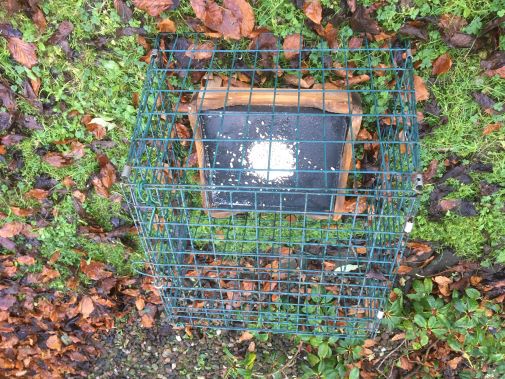
Ground bird table with wire cage to keep out magpies and jackdaws.
Finally for Christmas this year why not ask Santa for a lovely notebook and keep it for your drawings of the birds in your garden. If you are good at drawing -or even like me, you are not -make pencil drawings which are simpler to do than the elaborated affairs you often see in bird books. Bill Bailey a comedian who is very keen on birds wrote a book called the ‘Remarkable guide to British Birds’ and in this book are his pencil drawings. They are not perfect by any means, but they are charming illustrations!
Happy Christmas and New Year!
Books; Remarkable guide to British Birds Bill Bailey
Birdfeeder Handbook RSPB
My First Book of Garden Birds RSPB
Feed the Birds Tony Soper
Article on Feeding Birds written by Maureen Graham
HOMEMADE BIRD FEEDER.
Adult supervision for very young children
Empty Toilet Roll
Bird seed
Peanut or almond butter
String
1. >>Pour a large amount of bird seed on a plate
2. >>Spread nut butter onto the outside of your toilet roll
3. >>Roll the toilet roll in the bird seed
4. >>Thread a piece of string through the toilet roll, tie a knot in it and hang from a branch of a tree.