


 English
The European or Red fox is the largest of the 12 species which belong to the true fox group. They normally live alone or in small family groups. They can be found in all habitats from fields to mountains, farms to woodlands, sand dunes to city centres. Their preferred habitat is a mixture of woods, hedgerows, fields and somewhere with a water supply. They will dig their own den ( also called an earth) ) or occupy old badger setts and rabbit warrens. In towns they can make dens under sheds or other outbuildings. Dens are mainly occupied when breeding as they usually prefer to live above ground.
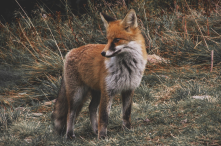
All red foxes have upright pointed ears with a black outer surface. They have a whitish throat. However, their most distinguishing feature is their long bushy tail (called a brush) ending in a whitish tip which they hold horizontally. Although they are related to dogs and walk on their toes they have partially retractable claws. Despite their name their coat colours are not always a vivid red but can range from greyish to even black. The colour will change as the animal ages. In winter their fur is richer and denser than in the summer months. They moult in April. If population densities reach high levels foxes can suffer from mange mites making them appear very tatty and sometimes the mites are so prevalent the poor fox becomes bald .The mites cause a lot of irritation to them so much so that they become thin from lack of hunting and may eventually die.
The fox has a wide range of sounds. The young or cubs will whine for their mothers. The adults will growl to the cubs when it is feeding time or when it is time to go back to the dens. Later as they become older and more playful cubs will emit barks and yelps. At about a month old they will let out explosive calls which are threatening to other cubs and intruders. In adults this explosive call becomes a much sharper bark to warn against enemies. Male and female foxes scream to attract a mate, and the males also do this to warn off potential competitors.
They also have a wide variety of facial expressions. For instance, young foxes will make an open-mouthed gesture towards each other when annoyed .Real aggression is rare but when provoked two foxes will rear up on to their hind legs and paw at each other with open mouths. Seldom is there any damage done to either animal.
Foxes have pronounced canine teeth designed to grip prey and tear flesh. Despite this they have a very adaptable diet and are omnivores. They will eat anything from rabbits which is their preferred diet to fruit, vegetables, birds, birds’ eggs, reptiles, frogs and even goldfish in a pond. They also consume a large number of invertebrates. Their hearing is so good they can hear and hunt worms by the slight noises the worms make in their burrows. Most of their feeding activity is at night but they will often come out in the evenings and even in daylight in places where they feel safe. I have watched one in a park in the centre of Belfast foraging early in the afternoon within sight of people and noises from busy traffic. Like squirrel’s foxes will bury excess food to eat later. This is called ‘surplus killing’ and can have a bad effect on seabird colonies for example. It has been reported that in one instance over 200 gulls in a colony were killed in one-night. Foxes appear to go into a frenzy when they start killing prey that cannot escape. Poultry for instance kept in a run with no opportunity to escape will likely all be killed. Foxes rarely attack healthy lambs, but they will eat sickly or dead ones and of course all carrion not forgetting roadkill. When hunting they tend to crouch down to camouflage themselves in the ground and then they use their hind legs to leap up and land on top of their prey.
The female fox is called a vixen The male is called a dog, or tod. A group of foxes can be referred to as a skulk, or leash or earth. Females can breed in their first year The breeding season lasts from December to February when the female will scream to attract a mate. They only have one litter per year. Gestation can last from 52 to 53 days They have their cubs in March in a den. The vixen will dig several of these before choosing one to give birth in. No bedding is ever used. Poor little cubs! Litter sizes can vary but on average four to five cubs are born. The cubs are born black, blind and deaf. Vixens are good mothers and will stay with them for the first three weeks keeping them warm and well fed. As the cubs grow the vixen spends more of her time above ground and Indeed after a month may only return to feed the growing cubs. It is about this time that the cubs start to eat solid food. By 6 weeks they will still be fed by their mother but will also start to hunt. The dog fox never stays at the den but will bring food for the family and then resume hunting. When the weather becomes warmer, they leave the den completely and live mostly above ground spending the day hidden in undergrowth.
Most female foxes will never leave their home territory. Sometimes there can be as many as six additional young females assisting a mature female with bringing up her cubs. Most male cubs leave their home territory by the time they are a year old. Territories are marked by urine and faeces. Foxes have scent glands on their feet to mark well used trails so they can follow them easily.
The life expectancy of both sexes can be as short as a year .If they are lucky, they will survive until they are 5 and if they are very lucky, they can reach the ripe old age of 10!.
The problems with foxes are that they are considered pests by many. Urban foxes have been identified as threats to small pets like rabbits and guinea pigs as well as to cats, small dogs and puppies. Many householders dislike them because of their smell, damage they do to lawns and flowerbeds and their loud vocalizations especially during the breeding season. Gamekeepers in large country estates where pheasants and grouse are reared for shooting also are no friends of the fox. Farmers and people with small holdings are not great fans either! I own a small flock of chickens and ducks and over the years have lost a few to foxes. One fox even entered my garden in the afternoon while I was hanging out the clothes and grabbed one of my hens only eight metres away from me. I never saw it until it was too late.
During the 1970s up to 100,00 foxes were killed each year for their skins. Poisoning of foxes is not uncommon. It can be due to either eating illegally set baits or because they have eaten dead animals that have themselves been poisoned. Traffic is another hazard especially for the young cubs. Other potential threats are from pet dogs and large birds of prey such as the golden eagle. Diseases like distemper and mange can potentially kill foxes as well. Northern Ireland is the only place where hunting with dogs is still legal. This includes not only fox hunting but hare and stag hunting. Hopefully these barbaric sports can soon be made illegal as it has been estimated that over 70% of Northern Irish people supports a ban on all type of hunting.
It may be difficult to convince many people that foxes can be beneficial. Foxes provide vermin control preying on mice, rats and pigeons. Rabbits if they become too numerous can cause serious damage to farmers crops and foxes do a good job in keeping the rabbit population under control .They eat roadkill and in towns they provide a litter clean up service by eating discarded food .They even help to disperse seeds by eating fruit.
If foxes are not wanted in the garden, for example, there are a few things that can be done to discourage them. The use of flashing lights, and loud noises such as music may frighten them. Foxes are timid creatures and if they think that there is a threat they will run away. Large dogs will deter them and many farmers now own alpacas or lamas to ward foxes off their land. I have donkeys which certainly do a good job in letting me know if foxy is about! Fox proofing the garden with chicken wire or even an electric fence can work especially if the area is small. Using natural methods of control like boiling chilli pepper and garlic together and spraying it on areas where there has been fox activity can work as can spraying areas with vinegar, garlic, lavender and mint. It is also said that a good deterrent is the smell of human male urine! It’s also important to remove uneaten food left outside such as leftovers from a barbecue or food left for birds and hedgehogs as foxes are opportunists and will visit regularly if there is a chance of a meal. Dustbin lids should be tightly secured . Foxes are very clever so all these obstacles may work for a little but not for ever!
Finally, the joy many people get from even catching a fleeting glance of a fox is something very special. Watching nature can play such an important part in reducing anxiety and depression that it should never be overlooked although I must say when I hear a fox at night my anxiety levels go sky high as I presume does my chickens!
BOOKS
The Hidden World Of The Fox ; Adele Brand
Fox Facts; Book For Kids
The Ultimate Fox Book For Kids ; Jenny Kellett
Fantastic Mr Fox ; Roald Dahl
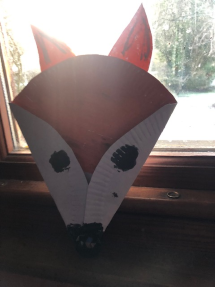
TO MAKE A HANGING FOX MASK.
Paper plate
Paint –orange and black
Buttons for eyes and nose (optional)
1.Paint three quarters of the plate orange. Let dry.
2. Fold the white parts of the plate together until you have a fox’s face.
3. Draw 2 eyes and a nose or glue on 2 small buttons for the eyes and a bigger button
for the nose
4. Hang in your bedroom by putting string through a hole at the top of Mr Foxy.
Article on Red Foxes by Maureen Graham