


 English
There are two species of seals around Northern Irish coasts, the grey seal and the common or harbour seal. The grey seal is the most common. Both are true seals in that they have no external ears. Leading a mostly aquatic life they go to land only to moult, rest and have young. Both are sociable and form harems or colonies.
These two species are quite easy to distinguish from each other. The grey seal has a larger head with a sloping nose while the common seal has a smaller round labrador type face with v shaped nostrils. The grey is mostly as the name suggests of a grey colouration with dark blotches and spots with pale bellies.
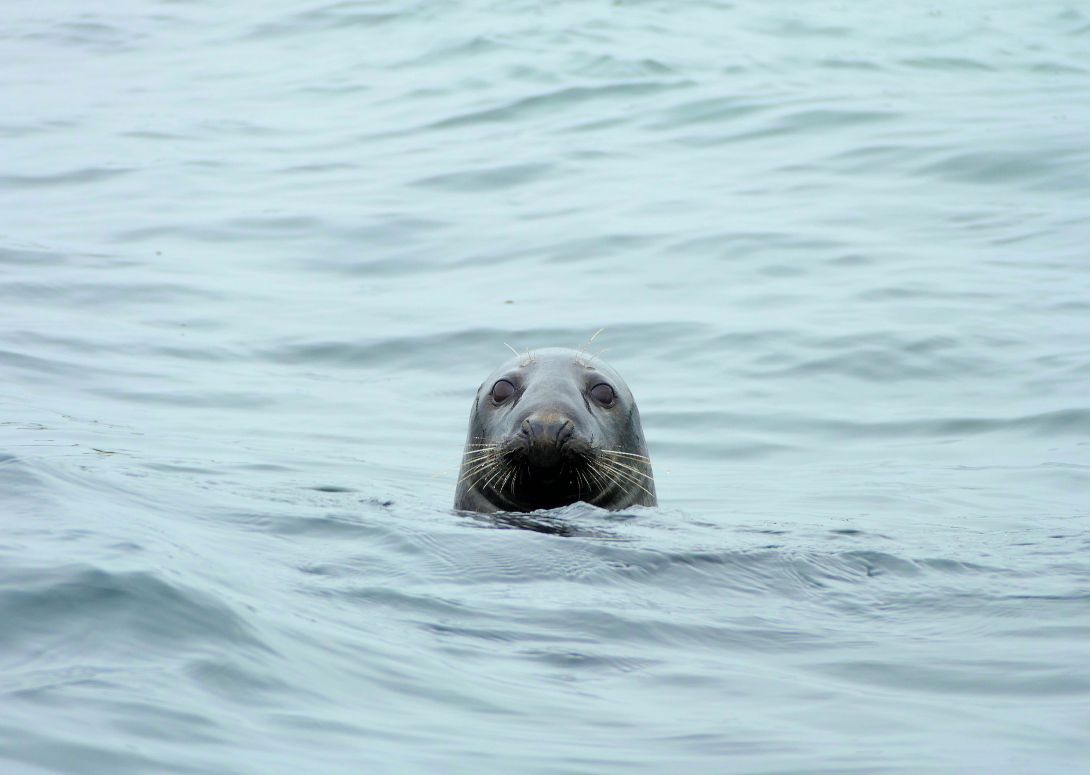
Grey seal
The common seal varies in colour from white to dark brown, generally though they are grey with dark spots. Unlike the common seal ,grey seals have large colonies. One of the most important colonies is off the Blasket Islands in Co Kerry and in Northern Ireland they can be spotted off Rathlin Island and around Murlough Bay.
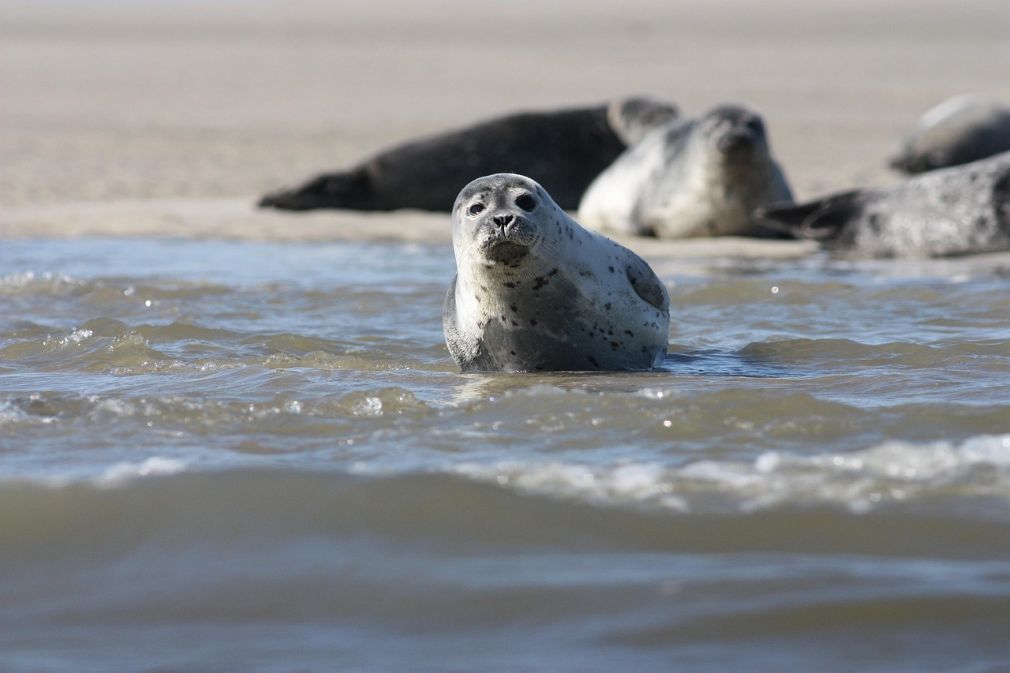
Common seal
Both species have a streamline torpedo shape with four limbs called flippers armed with small claws. On land they are ungainly and move in a flopping style but once in the water they demonstrate their agility and can reach speeds of 25 knots and dive to depths of 300 metres. They have very good vision with large forward-facing eyes. In areas of good light vision is used but in deeper areas and in poor light they rely on their sensitive whiskers to pick up movement from their surroundings. Their lifestyle is to spend half of their time resting and the other half hunting fish ranging from sand eels to cod and molluscs from squid to octopus . Seals emit clicking noises when hunting. They can remain submerged for quite a long time. Around Ireland this has been found to be usually about 10 minutes . During a dive they will close their nostrils and on very deep dives they can reduce their blood supply and slow their heart rate .
Forty percent of the entire world population of grey seals are around the coasts of Britain. Grey seals breed in Autumn or Winter on offshore islands and moult from January to April, whereas common seals breed in June and July and moult soon after giving birth. In both species the males are larger than the females and are called bulls. Bulls reach maturity between 4-6 years. The females called cows reach maturity between 3-5 years. Grey seals are known as ‘capital breeders’ which means they spend little time with their pups, and both sexes will fast during this time This can last up to 50 days for the males in which they have to rely on their fat reserves or blubber for energy. Male grey seals do fight to maintain very loose territories amongst groups of females. They have many partners but only a few will monopolise the females. Pregnancy is ‘ delayed’ which means that the fertilised egg’s development is delayed until conditions are favourable. On average the pregnancy lasts for eleven and a half months. Only one white pup is born, they cannot swim and the female nurses them for three weeks. After this period around about January, she departs to the sea leaving them to fend for themselves. These pups stay on the land for another couple of weeks until they have completely shed their white fluffy coat to a more waterproof one.
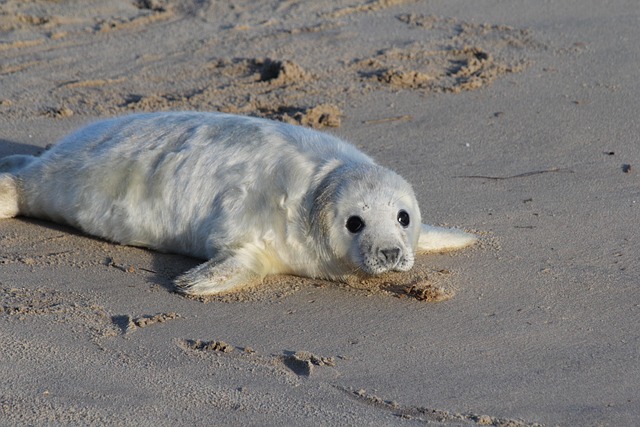
Grey seal pup
Common seals like the greys have delayed implantation although their pregnancy may be a little shorter, anything from 9 to 11 months. They give birth to one pup. These pups are grey and can swim and dive a few hours after birth .They are nursed for 3-4 weeks.
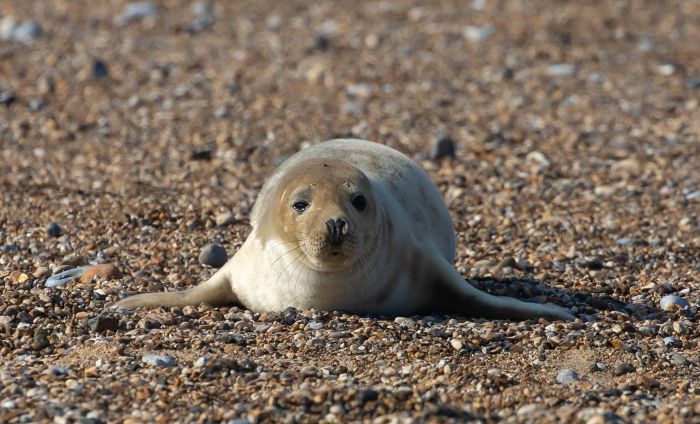
Common seal pup
In both species the males can live until 25 years while females can live until 30 to 35 years .They have no major predators in our waters although there is always the potential of shark and killer whale attacks. Sometimes large grey seal males will kill both common and smaller grey seals as well as common porpoises .
All seals face an uncertain future. Climate change and the warming of oceans is a major problem as is plastic pollution, entanglement in discarded fishing equipment, boat collisions, oil spills, the phocine distemper virus which was first recognised in 1988 in Europe where 60 percent of the North Sea common or harbour seals and a few hundred grey seals became infected and died. Starvation and infection from bites are also a threat. Both species are protected by law under legislation such as the Wildlife ( Northern Ireland ) Order 1985 which makes it an offence to kill injure or take them. They are beautiful creatures and are one of the wonderful sights in our ocean and around our shores.
Seals written by Maureen Graham Hon Secretary