


 English
Sixteen members travelled to Portmore Lough RSPB Reserve on Saturday 29th June 2024. We were met by Warden Laura Smith who had placed a moth trap overnight.
We were impressed by the profusion of beautiful moth species she had trapped. Thirty -four species were identified including the impressive Elephant Hawkmoth, Poplar Hawkmoth, Garden Tiger, White Ermine and Swallow-tailed Moth. Then the ingeniously camouflaged Buff-tip which looks like a piece of broken twig and the Pebble Prominent which looks superficially like a pebble. Then others with intriguing names like Hebrew Character with wing markings like a letter from the Hebrew alphabet.
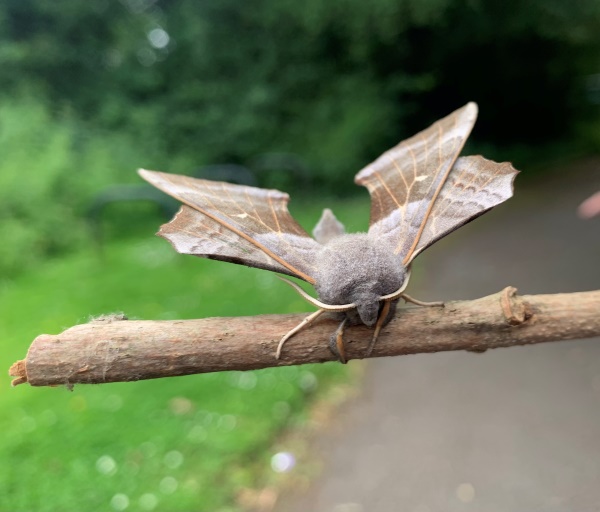
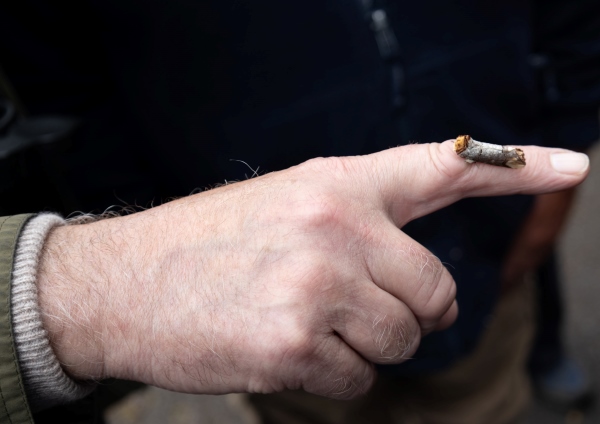
Poplar Hawkmoth Photo by Ida Cairns Buff-tip Photo by Michael Mullan
The full list of species is listed below.
Lapwings and a lapwing chick were seen from the platform. The Konik ponies were keeping out of sight.
Along the path to the bird hide we noted Red Valerian, Purple-loosestrife, Meadowsweet, Vetches, Round-leaved Sundew, Pond-sedge and a Meadow Pipit on a fence post.
The three rafts on Portmore Lough were very noisy with lots of nesting Black-headed Gulls and Common Terns, both species with chicks visible. One of the rafts had rotated so we did not see the Mediterranean Gull chicks. A Bream kept swimming into view obviously spawning in the shallow water just in front of the hide.
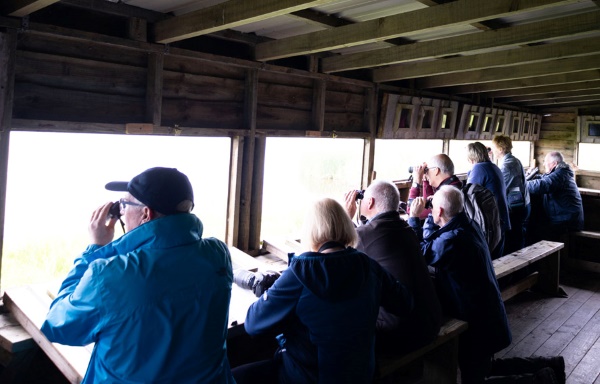
At Portmore Hide
After a quick lunch we drove to Montiagh’s Moss Reserve where we were led by Cathryn Cochrane RSPB Warden and Bob Davidson who several years ago had discovered and realised the wildlife potential of this 50-hectare site. Montiagh’s is a raised bog that had for many years been damaged by heavy peat extraction to fuel Portadown and Belfast. This had included somewhat unusually peat extraction from below the water table. The area was abandoned in the 1940’s, lying dormant over the next 80 years. In 2017 RSPB acquired a grant to restore the bog. While blocking drains would have recreated the raised bog it was decided instead to open up the old peat pools. This promoted growth of immersive and floating vegetation, ideal breeding habitat for dragonflies and damselflies. The area is rain fed with no runoff from farmland, so much less nutrient contamination. When we arrived, it was initially a dull afternoon—then suddenly we had bright sunshine, and the place suddenly came alive with dragonflies and damselflies.
Cathryn and Bob identified Variable, Irish, Large Red and Blue-tailed Damselflies showing us how to distinguish Variable from Common Blue and Azure by examining the black markings on the second thoracic segment. Four-spotted Chaser dragonflies were patrolling very fast and agile up and down the ponds. Eventual success netting one—see photo. Ringlet butterflies were also flying.
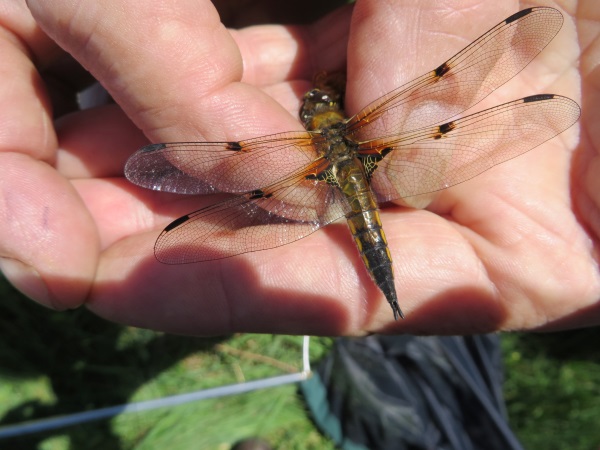
The Four-spotted Chaser bit Jackie (Photo by E.K.H.)
At the same time Alan Aitken was pond dipping and showed us larvae of dragonflies and damselflies as well as the larval stage of Diving Beetle, Backswimmer and Great Diving Beetle.
Bob and others pointed out Bog Asphodel, scientific name Narthecium ossifragum as in the past this plant was blamed for causing broken bones in sheep grazing on bogs.
We were also shown Royal Fern, Bog-myrtle, Lousewort, Gipsywort, Pennywort, Round-leaved Sundew and Marsh Cinquefoil. Bob pointed out Bladderwort and explained its trapdoor mechanism for capturing and ingesting pond insects from which it derives nutrients.
A Lesser Butterfly-orchid was pointed out--we contributed to the path trodden by other photographers.
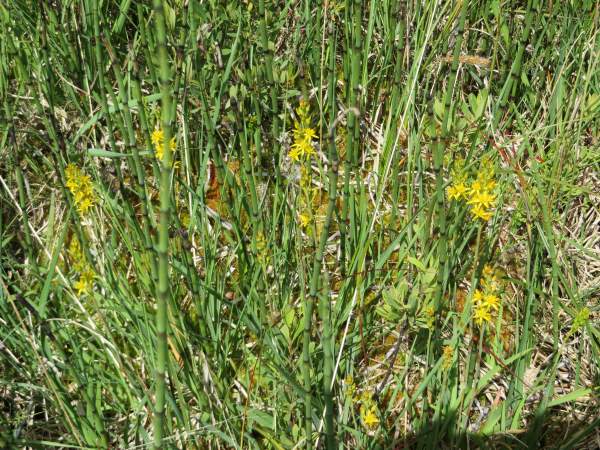
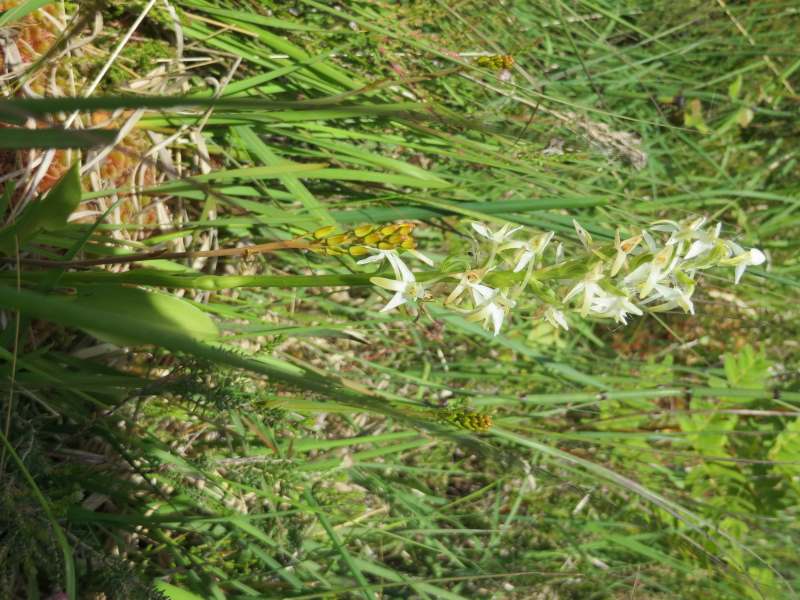
Bog Asphodel (Narthecium ossifragum) Lesser Butterfly-orchid (Photos E.K.H)
Bob explained how Montiagh’s Moss is important for Marsh Fritillary Butterfly having lots of the food plant Devil’s-bit Scabious and how the caterpillars weave a web nest making them relatively easy to detect and count. Every year RSPB do a web nest count from randomly selected squares over Montaigh’s. In 2021 they found 15. In 2022 found 30 but last year worryingly only found 4. The caterpillars are sought out by a parasitic wasp which goes through population surges causing the number of Marsh Fritillary caterpillars to crash. When a crash in Marsh Fritillary occurs in one area it can be repopulated from another area, a maximum of10 kilometres away.
The Chairperson thanked Laura, Cathryn and Bob for leading us on these two magical reserves and thanked Alan Aitken for organising this outing which was a resounding success.
Report written by Ernest Hunter
List of Moths trapped at Portmore Lough Saturday 29th June 2024
Elephant Hawkmoth
Clouded Border
Poplar Hawkmoth
Garden Tiger
Cinnabar
Large Yellow Underwing
Brimstone
Middle-barred Minor
Light Emerald
White Ermine
Snout
Burnished Brass
Golden Y
Swallow-tailed Moth
Bright-line Brown-eye
Heart and Dart
Map-winged Swift (male and female)
Magpie
Gold Spot
Mottled Beauty
Spectacle
Common Wainscot
Buff Arches
Pebble Prominent
Willow Beauty
Swallow Prominent
Buff Ermine
Hebrew Character
Buff-tip
Plain Golden Y
Flame
July Highflyer
Small Square-spot
Lesser Common Rustic