


 English
Our chairperson, Ernie Hunter welcomed everyone including some new faces to our Christmas meeting. He apologised for November’s meeting, cancelled due to the speaker’s illness and to bad weather. The death of our member Shane McGarvey on 19th October was mentioned. Shane was passionate about birds especially the cuckoo and last year guided many of our members around Lough Fea to look for these birds . We were not disappointed. He had also given a talk to us on cuckoos last December and led us on the Dawn Chorus event at Lissan House in May this year. His knowledge on all wildlife was astounding. Ernie Hunter sent condolences to his family.
Our first speaker was Sharon Loughrin, Chairperson of Lissan House Trust. With the help of slides she told us about this ‘Golden Place’, how it had been built in the 1600s and had the unique distinction of having been in the same family until 2006 when Hazel Dolling (nee Staples), the last owner died. It was Hazel’s wish that Lissan would be left to the community watched over by a group of trustees. It is not a National Trust property and is entirely maintained by enthusiastic volunteers.
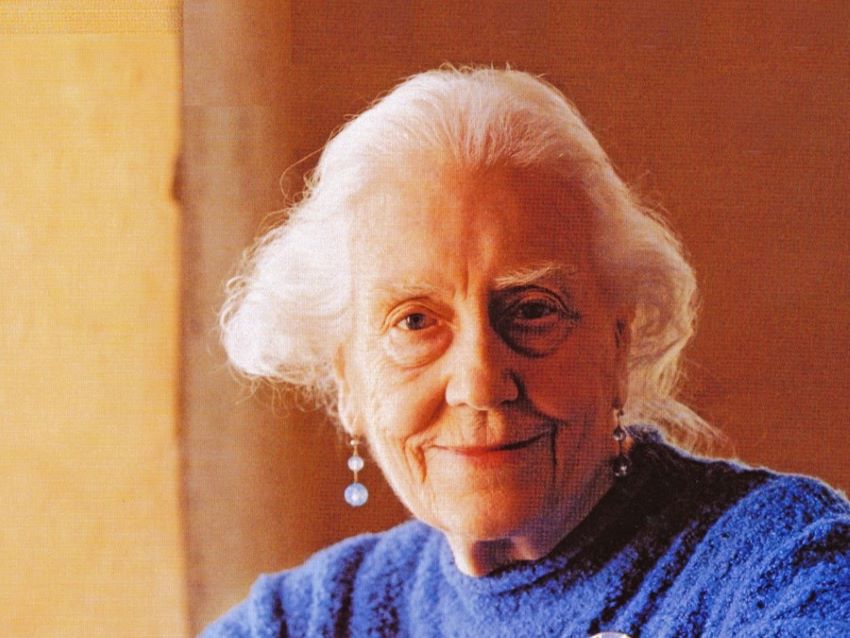
Hazel Dolling (Staples) last owner of Lissan Estate
Sharon said there are now 30 allotments ( pesticide free) on the estate as well as walks for hikers, cyclists and even horse riders. Lately it has joined in partnership with Ballinderry Ripple ,a group which is dedicated to conservation protection and improvement of rivers and loughs of the Ballinderry River catchment area
The importance of Lissan as a haven for wildlife and flowers was illustrated with photos of various plants and animals which live on the estate. One such plant to be found is the birds nest orchid which grows as a parasite on tree roots especially those of beech trees.
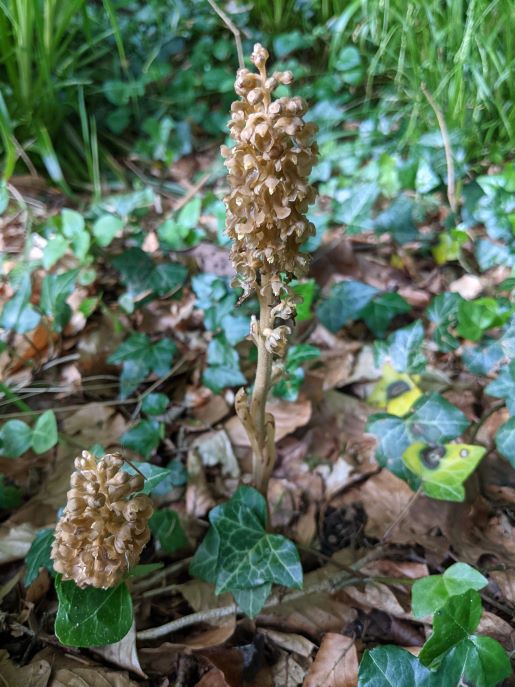
Bird's Nest Orchid:-Photo by Sharon
Wood wasps or horntails have also been seen They may look ferocious but the long stinger like tail is an ovipositor and not some lethal weapon! It takes 5 years for the wasp to mature from a larva to a flying insect. At one time there were many grey squirrels living at Lissan but their numbers have now declined. With the help of a night camera pine martens were seen living and enjoying life at Lissan This could be the reason for the demise of grey squirrels as pine martens’ prey on them. ‘Lissan pine martens’ are not shy as they have been caught on camera even in daylight playing on outhouses rooves!
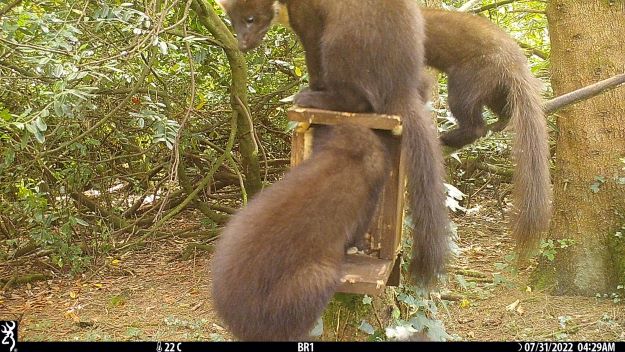
Pine Martens caught on trail camera at Lissan
Sharon then discussed the outhouses which are in a bad state of repair. Again, like the main house they date back to the 1700s and before. They are on the heritage at risk list and after some work was undertaken on one of them a bell tower was discovered. As well as this some letters written by Hazel had been found earlier expressing her wishes that the bell should be returned to the bell tower and flower beds should be made outside the tower. Sharon with her husband and with the help of volunteers are now in the process of following Hazel’s wishes. They have also made “dead hedges” . Dead hedges are made from tree branches piled high against posts where they eventually form a thick mass of wood and twigs.
The plant laurel is a nuisance at Lissan. It is hard to control but Sharon hopes that by a technique she has learnt of scraping the bark and spraying this with a chemical the laurel will die, never to return—hopefully!
Sharon ended her talk by explaining why Lissan is such a wonderful place to visit and why it is protected for nature rather than for people .For instance the bluebell wood has been magical this year.
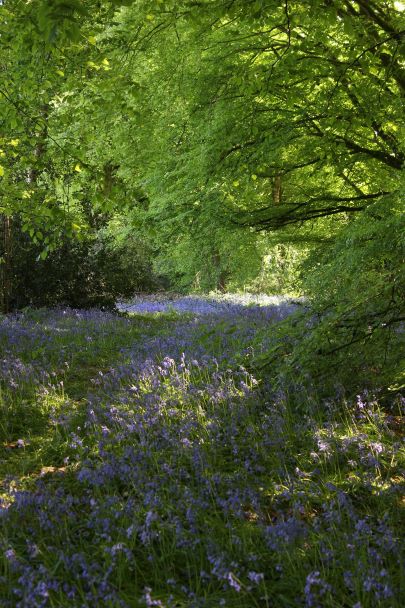
Bluebells at Lissan were spectacular this year :-Photo by Sharon
Robert’s oak’ is an impressive 350-year-old tree and although they hope it has many years left they have replanted one of its acorns that will one day replace its very old parent.
A major project is to restore the turf house. At the moment it has tarpaulin over it, but it is hoped that a grant to restore the roof will be successful. It will need about £250,000 for this. After answering questions Sharon and her husband were thanked by Ernie for the remarkable amount of work, they have done to help keep this “Golden Place” alive
Dr Dave Jewson our second speaker, talk was on the mysteries of Lake Baikal a vast expanse of water in Siberia. Dr Jewson has been studying this lake for 25 years and had in the past visited it two or three times a year. It’s a very old lake over twenty million years and is one mile deep making it the deepest lake in the world. Not only this but it is four hundred miles long and has 1,800 endemic species living in it. It is oxygenated right down to the bottom of the lake.
It is composed of three basins, South, Middle (which is the deepest) and North. There are villages dotted around its shores but with very few roads the main transport is by boat. In the summer temperatures can be a pleasant +30 degrees but from December to April/May it is so cold that the lake entirely freezes over. A six ton lorry can even drive on it! The temperature in winter can go below -40.
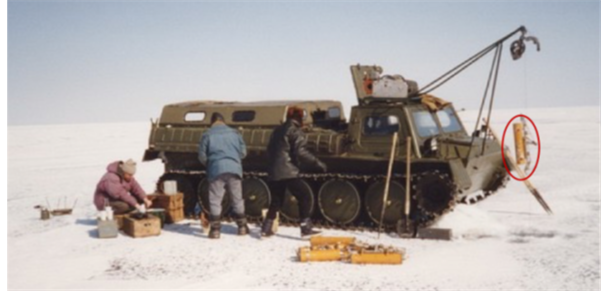
Vistihod "Go Anywhere" vehicle
The biodiversity in this lake is amazing. It is home to earless Baikal seals, the world’s only freshwater seal with a population of 120,000 animals. The mother seal makes several dens under the ice where her pups live. She blows bubbles into the dens for the babies to survive. The seals main food is omul, a fish related to the pollen in Lough Neagh. Hunting unfortunately threatens these animals and their numbers.
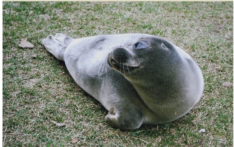
Baikal Seal pup.
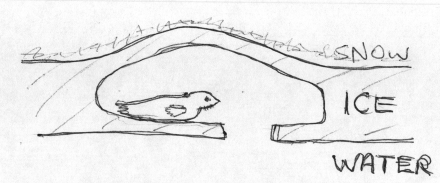
Seal pup den under the ice (Mum blows bubbles into the den for the pups to breathe)
Another interesting fish is the golomyanka, a deep-water oil fish which lives on the bottom of the lake, It has no swim bladder and is transparent.
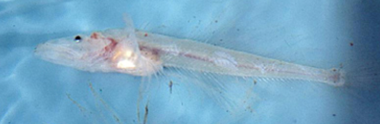
Golomyanka
Apart from a large selection of fish there are over 400 shrimp species which have adapted to live in the different habitats of the lake. There are diatoms and around the lake’s edges are sponges which filter the algae. Unfortunately, there is a problem with green algae which is killing off the sponges.
Then in David Attenborough style Dr Jewson explained how the photos were taken and how dangerous Lake Baikal can be when travelling on the ice in a vehicle. Paid by a grant from the Royal Society a ‘go anywhere’ or Visithod vehicle which looks like a tank but is very light and has no suspension has been procured
Many questions at the end of the talk were asked by our members and Ernie Hunter thanked Dr Jewson for a most fascinating talk.
Our third speaker was Thomas Cambell. Despite having been ill at the early part of the year Thomas as usual has been taking stunning photographs of animals. At Magillian he photographed two Black Guillemots having a vicious fight .
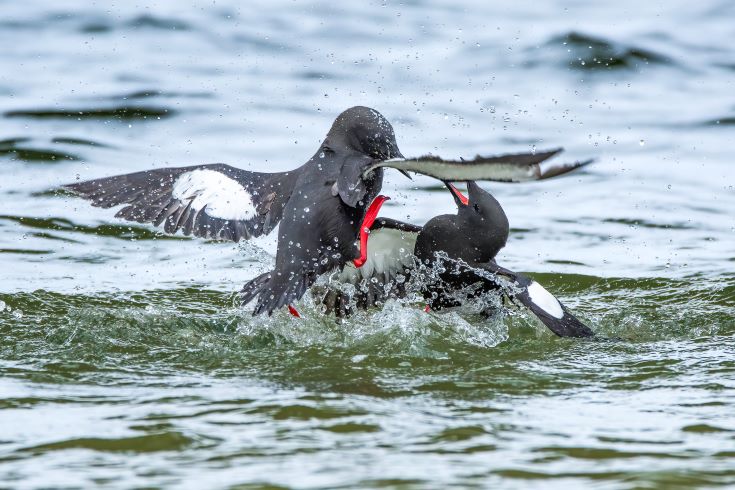
Black Guillemots in a vicious fight:- Photo by Thomas Campbell
Later in the year he photographed a beautiful osprey as well as more common birds such as godwits -- bar tailed and black tailed--- sanderlings, sandwich terns, gannet, divers, dunlin ,purple sandpipers, greenshank and redshank. The most amazing bird snapped was a tagged juvenile white-tailed eagle!
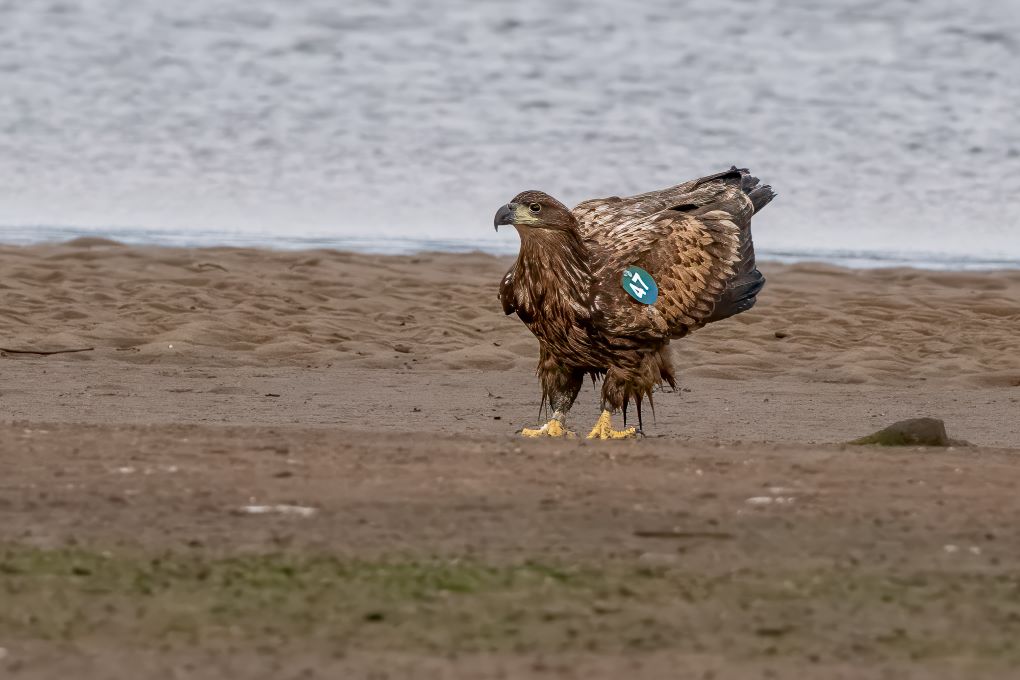
Juvenile White-tailed Eagle:-Photo by Thomas Campbell
Other birds identified were chaffinches, a greedy jay, wheatear, woodpecker and wonderful glimpses of the activities of blue tits. Apart from these birds he also had stunning photos of two pods of dolphins. There is no doubt Magillian is a great place to spot wildlife.
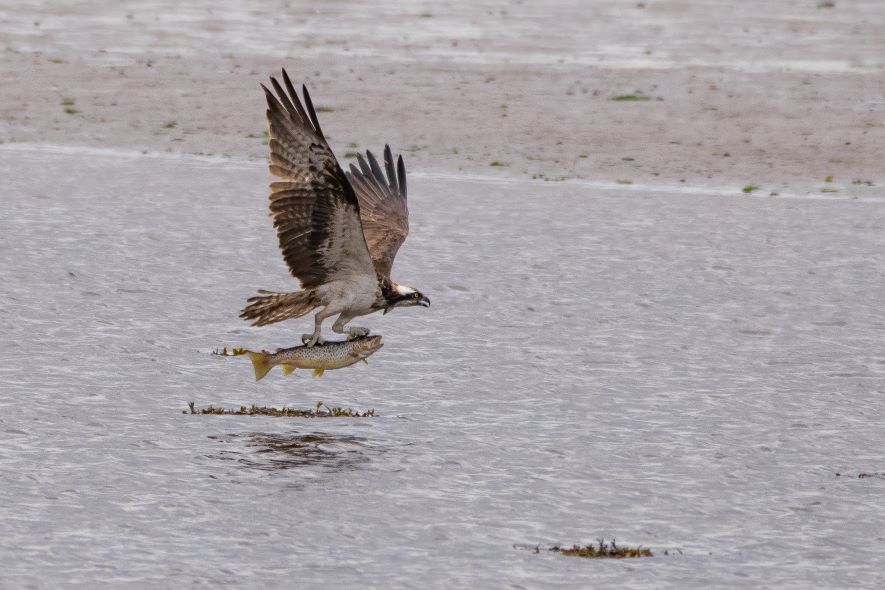
This Osprey had a struggle lifting this big fish:- Photo by Thomas Campbell
.Another good place he often visits is the Antrim Hills. Thomas took some great photos of two male cuckoos and one female been chased by small and also by bigger birds. The very active goldcrests, two thirds the size of the tiny wren were captured singing to each other. Photographs Thomas took of red squirrels showed the mischievous nature of these little creatures.
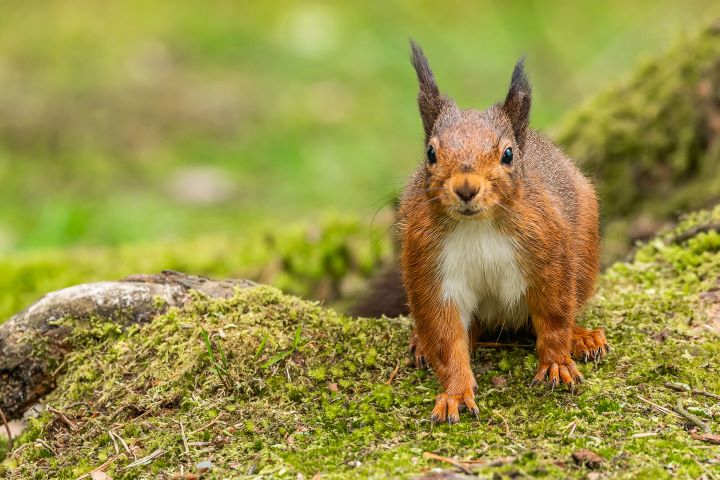
Red Squirrel :-Photo by Thomas Campbell
Questions were asked by our members and Thomas was congratulated on taking such stunning photos.
The fourth and last speaker was Maureen Graham who organised a Christmas nature quiz. The questions were a mixture of easy, quite difficult and a quite impossible one. The winner was Archie Thomson who received a small gift for his effort.
A lovely supper provided by committee members ended an interesting, educational and entertaining evening. Our Chairperson Ernie Hunter thanked all for attending and wished everyone a Happy Christmas and New Year.
Summary of Member's Night written by Maureen Graham Hon Secretary