


 English
Alan Aitken then introduced our speaker Dakota Reid who is Conservation Officer for the RSPB. She also volunteers with Wild Belfast which is a group dedicated to conserving and enhancing Belfast’s natural habitat.
Dakota has a passion for all invertebrates. They are not just a food source for birds but also for reptiles and mammals such as bats and foxes. They are also crucial in pollinating plants, acting as decomposers, recycling nutrients and controlling pests.
Northern Ireland is home to a diverse number of insects, and some are rare. For example, the cryptic wood white butterfly is found only in Ireland and not In Great Britain. It prefers open grassland as opposed to woodland glades where the similar wood white butterfly can be seen. The cryptic wood white has an unusual courtship with the males performing elaborate dances to signal their species. Other rare species found in Ireland are the marsh fritillary butterfly and the Irish damselfly.
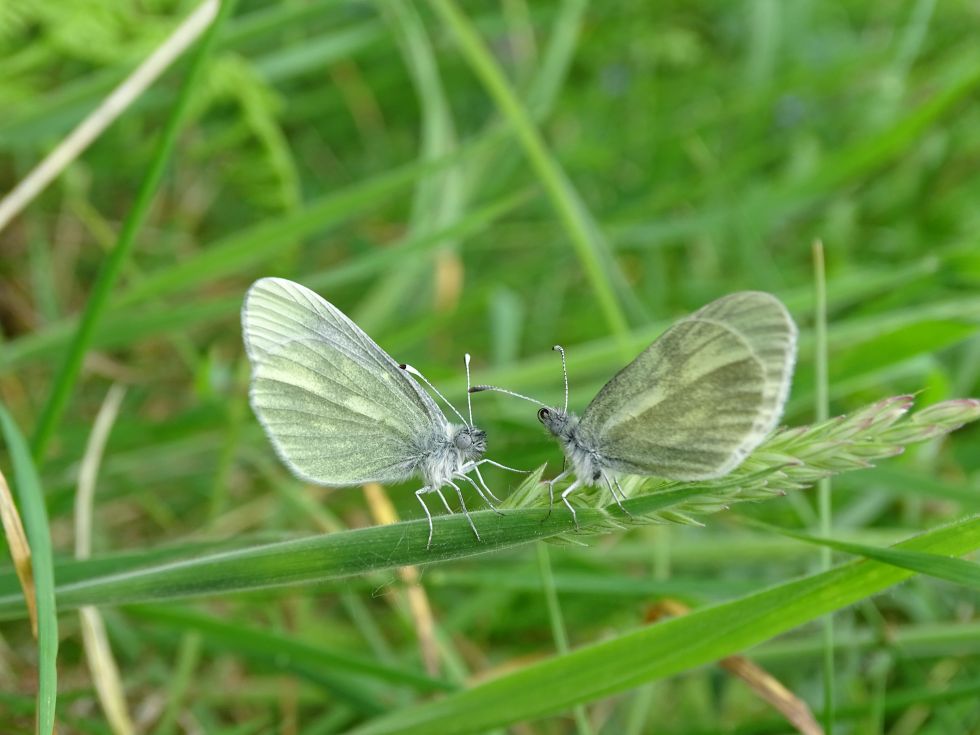
Cryptic wood white butterflies courting--Photo by Dakota Reid
Dakota explained how at a very early age she became interested in insects and spiders. Later with the help of a moth trap made by her uncle she became fascinated with moths especially the tiny micro and macro species. Macro- moths are larger than micro-moths and have evolved more recently. Lough Neagh is an important habitat for many moth species especially around Montiaghs Moss and Peatlands Park. Many are very interesting. For example, there are quite a few moths which are good at camouflaging themselves. The Chinese character moth is a macro-moth, whiteish with silvery markings but its most famous characteristic is its ability to use visual mimicry to avoid being eaten. When it rests it looks like a bird dropping!
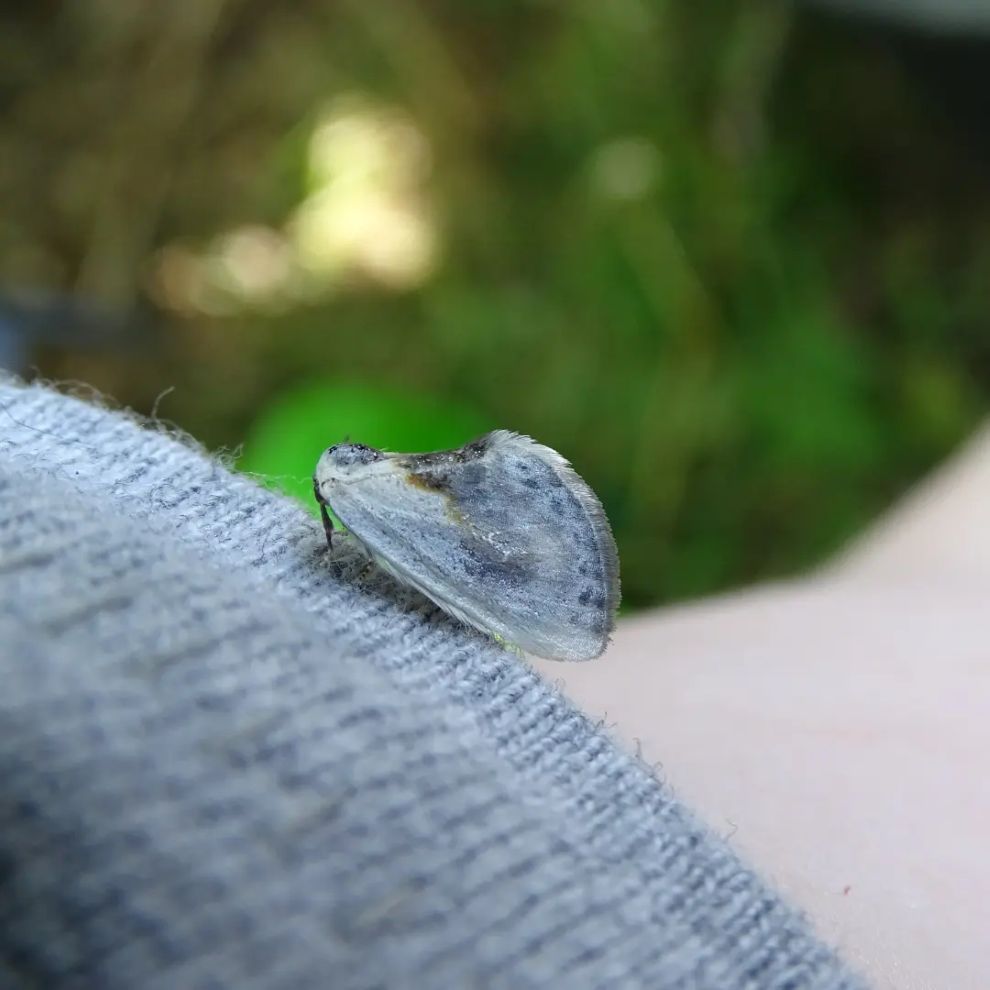
Chinese character moth --photo by Dakota Reid
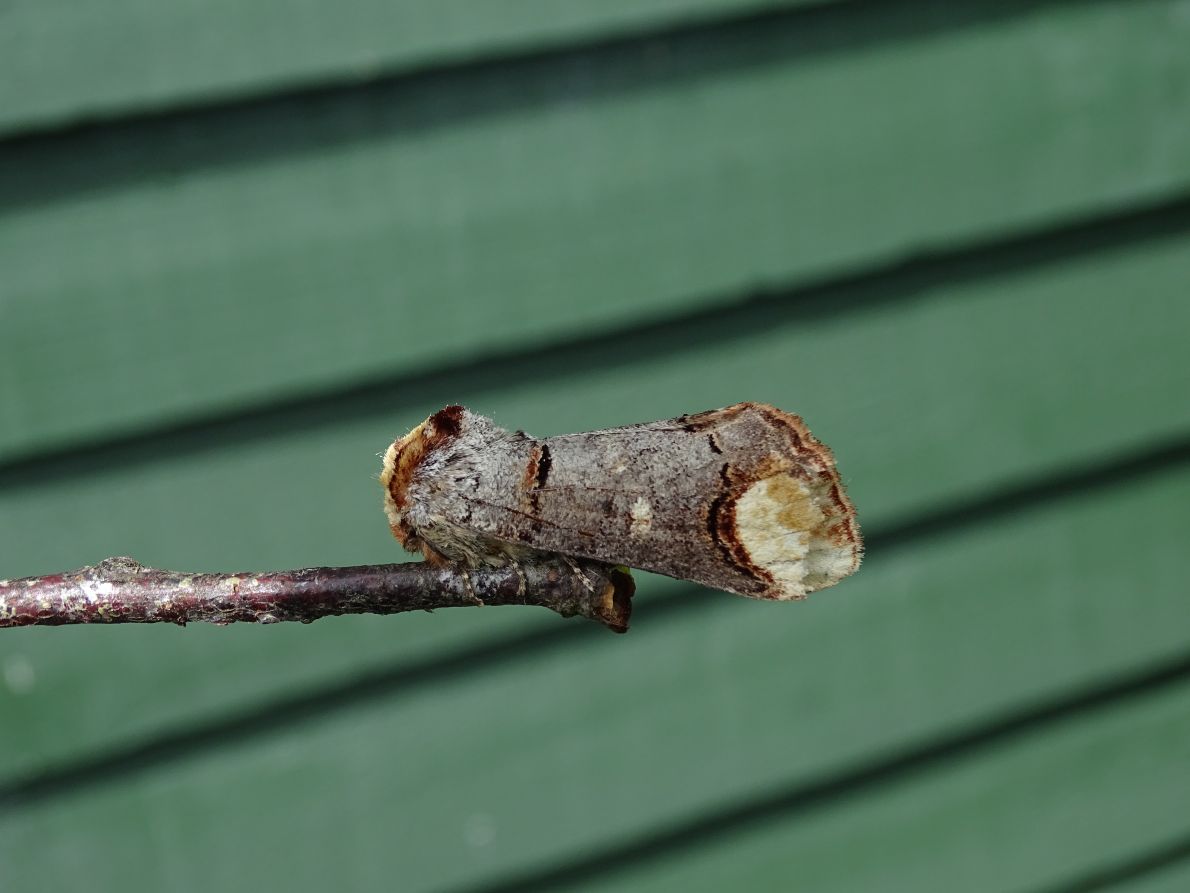
Buff tip moth has a clever disguise---photo by Dakota Reid
Dakota was very pleased when she discovered at Portmore Lough a new species of macro moth to Northern Ireland, the silky wainscot moth which is unusual in that it can appear in different colourations from plain greyish to others with black markings. Its larva is partially carnivorous, feeding even on the pupae of other wainscots.
There are about 100 species of bee in Ireland and every year more are discovered. Dakota commented this was probably due to climate change. Since 2017 the tree bumblebee can be located In Ireland and appears to be spreading due to their ability to use aerial nest sites such as roof spaces and tree cavities, resistance to many parasites and our warmer weather. It has a dark thorax and a white tail.
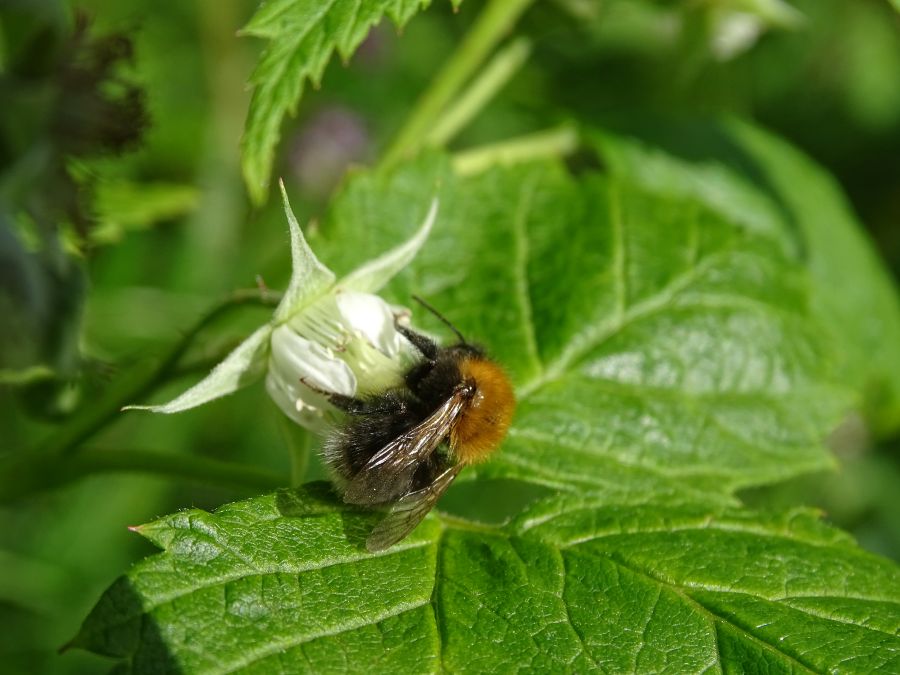
Tree bumblebee---photo by Dakota Reid
Many bees such as mining bees and red mason bees are solitary with the female building a nest in soil or hollow stems of plants. They are very important pollinators. Parasitic bees, also called cuckoo bees do not build their own nests, instead the female lays her eggs in the nests of other bee species leaving the larva to steal food and, in some cases, even kill the host’s young. Wasps like bees can be solitary and do not always have the usual yellow and black colouration that is associated with them. Some like the ruby tailed wasps are blue and red, are solitary and also parasitic.
Dakota then briefly mentioned the 24 resident dragonflies and damselflies which live in Ireland. The Irish damselfly is found in Ireland but not in Great Britain. The 4 spotted chaser is a common dragonfly brownish in colour with 4 spots on the wings and is found near ponds and slow flowing rivers.
Spiders are very important in the food chain. Most people know the long-legged house spider, but there are other interesting species such as the gorse orb spider, the cucumber spider and jumping spiders.
Dakota spoke on the importance of recording insects, noting down sightings and sounds. At the moment they are under recorded and appear to be declining. This may be due to many reasons such as habitat loss, abundance of too many nutrients in the soil, decrease in food and climate change. One-way insects can be recorded is by the Bug Splatter Survey which is done by photographing car registration numbers and noting the number and types of dead insects stuck on to the plate. A more pleasant form of recording is the Flower Insect Timer which basically means recording the total number of insects that visit a flower. Both methods help monitor insect population over large areas. Recordings also are important in finding any potentially harmful insects that may have settled in a habitat. A good example is the Asian hornet which is an aggressive predator of bees and native insects. The first confirmed sighting and nest removal occurred in Dundonald in 2025. Authorities have asked the public to report sightings with photos via apps like the Asian Hornet Watch to help prevent these insects becoming established. Recorded readings of all wildlife can be forwarded to CEDaR which has an online recording system where sightings can be checked by experts and then can become part of the national database.
Dakota emphasized the need to be prepared when undertaking wildlife recording. A phone is essential and she recommended buying good guidebooks such as those by Richard Lewellyn which have lovely, detailed illustrations in them. Irish guides are also helpful as are swatches from the National Biodiversity Centre which can easily be fitted into a pocket , Hand lens and a sweep net are good and for those people really keen on moths a moth trap is invaluable.
The talk ended with a quiz on mimicry in insects. Maureen Graham gave the vote of thanks and this was followed by a light supper.
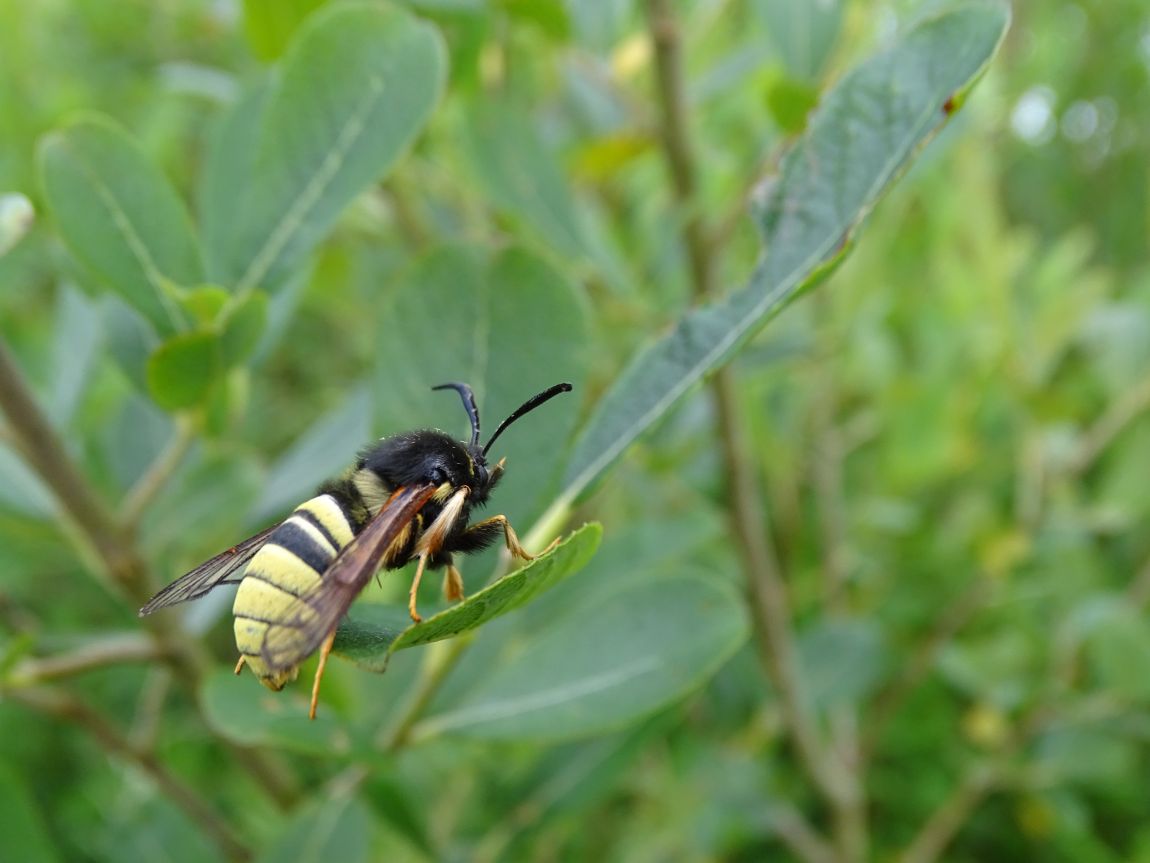
Lunar hornet moth --an amazing example of mimicry--photo by Dakota Reid
Lecture Summary by Maureen Graham Honorary Secretary